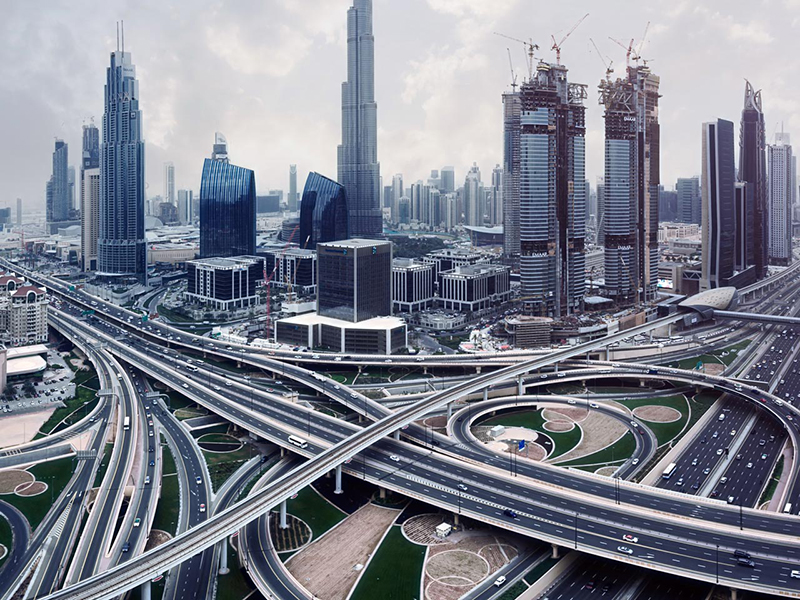
Driverless cars are rapidly transforming the global automotive industry, with China and the U.S. emerging as key leaders in innovation and adoption. China has announced bold plans for autonomous vehicles to account for 70% of all passenger car sales by 2035, signalling its determination to lead the sector.
While Waymo continues to dominate the US market and is preparing for UK expansion, Chinese tech giants Baidu’s Apollo Go, WeRide and Pony AI are accelerating their rollout at scale that could soon eclipse Waymo’s presence.
Yet, a new study by car leasing experts Nationwide Vehicle Contracts reveals a surprising twist – despite China’s AV ambitions, only two Chinese cities rank among the world’s top 10 most technologically ready places for driverless cars.
These are the cities most technologically ready for driverless cars
By analysing data metrics, including Mobile Download Speed, Mobile Upload Speed, Broadband Download Speed and Broadband Upload Speed, the new study reveals the cities around the world most technologically ready for self-driving cars.
| Rank | City | Country | Mobile Download Speed | Mobile Upload Speed | Broadband Download Speed | Broadband Upload Speed | Total Score (out of 100) |
| 1 | Dubai | UAE | 503.38 | 32.48 | 268.27 | 112.65 | 78.51 |
| 2 | Stockholm | Sweden | 317.88 | 43.65 | 204.39 | 133.93 | 72.42 |
| 3 | Bangkok | Thailand | 159.12 | 25.82 | 285.32 | 238.97 | 72.29 |
| 4 | Seoul | South Korea | 291.10 | 27.61 | 227.28 | 167.89 | 67.43 |
| 5 | Shanghai | China | 284.68 | 36.94 | 289.98 | 64.43 | 67.03 |
| 6 | Copenhagen | Denmark | 293.02 | 31.00 | 235.35 | 125.75 | 65.75 |
| 7 | Geneva | Switzerland | 138.60 | 32.71 | 256.59 | 170.58 | 65.58 |
| 8 | Zurich | Switzerland | 187.44 | 32.83 | 259.55 | 135.05 | 64.62 |
| 9 | Beijing | China | 254.66 | 38.52 | 251.48 | 48.56 | 61.47 |
| 10 | Sao Paulo | Brazil | 357.24 | 23.38 | 215.11 | 95.49 | 59.67 |
Dubai is the city most technologically ready for self-driving cars
The UAE city of Dubai received a score of 78.51 for mobile and broadband upload and download speeds. The city is known for its technological advancements and is expected to welcome its first version of operational AVs by the first quarter of 2026.
Stockholm, Sweden, also stands well prepared for the arrival of AVs with a score of 72.42. The Swedish authorities decided to decline Tesla’s request to test robotaxis in June 2025, and currently have no further plans to introduce them. But when they are ready, the city will be more than capable of fuelling their real-time connectivity.
Bangkok, Thailand, claimed third place (72.29) for its technological connections. The Thai city is known globally for its manic roads, but this city could be the perfect place to launch AVs thanks to strong wireless access.
Two companies have already done so, Waymo and Baidu Apollo. Two more are also looking to begin trial, Cruise and AutoX, highlighting that many are taking advantage of the city’s need for accessibility and great connections.
THIS Chinese city’s connectivity issues could impact the 2035 goals
Guangzhou is known as a leader in autonomous vehicle services in China and operates both WeRide taxis and shuttle services.
However, Guangzhou, China’s most populous city with over 37 million people, didn’t make the top 10 ranking of technologically ready cities. Pony.ai, which runs robotaxis in Guangzhou, is facing major connectivity problems because it lacks high-definition maps and enough data, both of which are essential for safe and efficient autonomous driving.
In May this year, one of its robotaxis even caught fire due to a malfunction. No one was injured, but the incident has raised concerns about Guangzhou’s technological readiness.
Keith Hawes, Director at Nationwide Vehicle Contracts, explains: “China’s announcement is aspirational and admirable to become the leaders of the autonomous vehicle industry by 2035 through both manufacturing and availability.
However, with large cities such as Guangzhou currently facing connectivity gaps, the ambitious goals need to be approached with safety and regulation at the heart, to minimise safety mishaps and earn the trust of consumers.
Our recent study shows that although some Chinese cities, including Beijing and Shanghai, are more technologically ready to fuel the usage of driverless cars, other cities still have a way to go from a technological standpoint before China’s AV goals are met”.